Exploring Wearable Tech: Fashion, Fitness, and Beyond
From stylish smartwatches to fitness trackers, explore how wearable tech is reshaping how we dress, train, and live in a smarter, connected world.
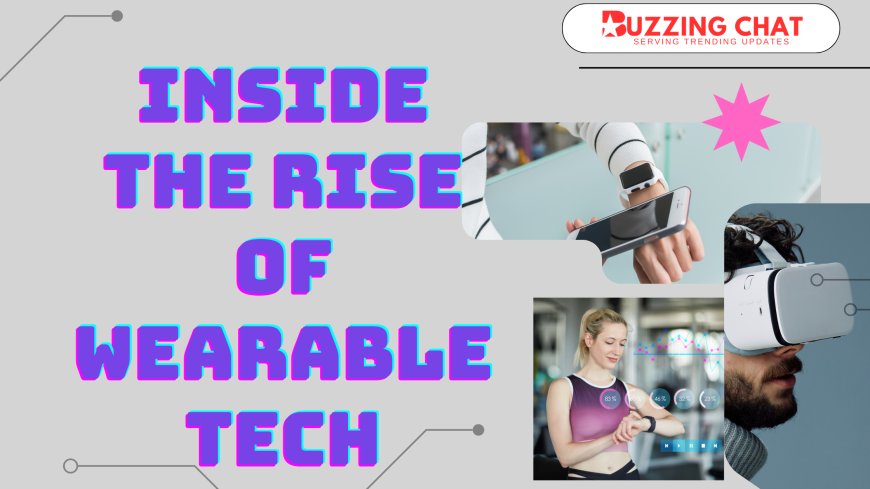
Introduction
In 2025, wearable tech has evolved beyond smart television sets and watches, and into an integral part of our daily lives that influences how we dress, track our health, and interact with the world through immersive tech.
Whether it is smart clothing that adapts to temperature changes or wearable sensors that monitor heart rate in real-time, the adaptation of technology into personal items has revolutionised both fashion and fitness.
These innovations range from tracking heart rate variability and actigraphy for sleep patterns to more advanced health wearables that alert the user with insights into their stress tracking, activity, and recovery.
As new innovations in AI wearables and smart fabrics keep releasing every other year, users are embracing a quantified self-lifestyle wherein health monitoring and performance optimisation go hand-in-hand.
In this article, we will be discussing what wearable tech is, the new trends in wearable tech in 2025 and the conversations around tech ethics and data ownership that arise from this rapidly AI-operated world.
Also, read about the future of work with the rapidly progressing AI tools in development here.
What is Wearable Tech?
Wearable technology is any kind of electronic device that is designed to be worn on the user’s body. These devices can take many forms, including jewellery, accessories, health wearables, and clothing or elements of smart clothing made with smart fabrics.
Modern wearable tech falls under a broad spectrum of usability. This includes smart watches, fitness trackers such as Fitbit Charge, VR headsets, AI wearables, smart jewellery, web-enabled glasses or Bluetooth headsets, many of which are fitted with wearable sensors to assist with health monitoring, entertainment, and real-time interaction.
(Hanna, April 2nd, 2025) Wearables work by a different principle, based on their intended use, such as health monitoring, fitness or immersive tech based entertainment. Most wearable techn contains microprocessors, batteries, and internet connectivity so that the collected data can be synced with other electronics, such as smartphones or laptops.
Wearables have pre-installed wearable sensors that help to track bodily movements, provide biometric identification or assist with location tracking. In some cases, activity trackers also have features such as heart rate variability, or day-to-day stress tracking.
For example, Activity trackers or smart watches are the most common types of smart wear that come with a strap that wraps around the user’s wrist to monitor their physical activities, heart rate variability, or even stress tracking throughout the day.
Other examples of wearables are usually worn on the body or attached to clothing like smart fabrics, thus being functional without causing physical harm to the user.
Also, read about how to use AI to start a small business here.
Wearable Tech Trends in Health & Fitness
Beyond the feeling of joy that comes with wearing the latest wearable tech device, Wearable Tech can also help improve a person’s health greatly.
In a 2022 review conducted by The Lancet, which analysed over 164,000 people from all age groups, it was found that people who track their activity using wearable sensors were more likely to have an improved overall body composition, fitness and physical activity.
This reflects a growing shift towards a quantified self, where users seek deeper insights into their health through health wearables. Participants using wearable tech were also more likely to take over 1,800 extra steps per day and walk longer distances for 40 minutes longer.
Researchers have found that wearable tech devices not only empower people to make healthier changes to their lifestyle but also take greater control of their own well-being through health monitoring.
For example, people with diabetes who need to continuously monitor their glucose levels often take the help of smart wear to avoid dangerous spikes or drops. In some devices, there are advanced features with heart rate variability and actigraphy that further help to personalize care and make it easier for the user to detect early warning signs.
The newer age devices are now connected to AI wearables that can learn user patterns, have in-built stress tracking and customised feedback. As immersive tech becomes more integrated into our routines, questions about tech ethics and data ownership rise, especially as personal health data becomes valuable.
Benefits of wearable tech in Health:
- Enhances real-time health monitoring
- Increases access to healthcare data like heart rate variability, actigraphy, and stress tracking
- Detects potential health issues early with the help of AI wearables
- Provides support for chronic disease management
- Provides personalised healthcare plans using insights from health wearables
- Reduces healthcare costs.
Other examples of wearable tech in Healthcare are listed below:
- Fitness trackers fitted with wearable sensors
- Smart watches and health wearables
- Wearable ECG and Cardiac monitors
- Smart health cloning
- Biosensors and implantable
- Chronic disease management health wearables
- Hospital-grade health wearables
Types of wearable tech in Fitness:
I. Smart watches:
Smart watches are the most popular health wearables that offer a wide range of features, including heart rate variability, GPS tracking, keeping a track of your workout, counting steps, sleep tracking or blood oxygen monitoring.
Some newer health wearable models even have advanced health features like ECG monitoring and stress tracking.
II. Fitness Trackers:
These devices are used for tracking fitness metrics such as steps, distances, heart rate, and sleep patterns. Popular examples of fitness trackers are Fitbit, Garmin and Xiaomi Mi Brand that track actigraphy, steps and sleep, providing affordable ways to join the quantified self-movement.
III. Smart clothing:
Smart clothing are clothing items with wearable sensors that are capable of monitoring various biometric data. The sensors in smart clothing collects data related to heart rate and body temperatures using smart fabrics, pushing smart wear into new technological fields.
IV. Implantable Devices:
Wearable tech innovations like Wearable cameras, which can be mounted on helmets or uniforms, provide a first-person perspective of an athlete’s performance. These cameras, powered by AI wearables, are particularly useful in sports like American football and ice hockey, where athletes tend to record themselves to have a better understanding of visual cues and player positioning. It also allows for continuous data tracking related to health monitoring.
V. Virtual Reality Gear:
VR is finding its place in the fitness sector as well as in video games. Popular products such as Oculus Rift and HTC Vive paired with AI wearables, allows users to do yoga and boxing in VR through immersive tech without leaving their headsets. This allows the sport to remain fascinating, especially for those who dislike traditional routines, all the while providing important insights on stress tracking activity and heart rate variability.
Also, read about Top AI tools revolutionizing content work here.
Wearable tech in Fashion trends:
(Glance, 22nd April 2025) Fashion technology refers to the intersection of innovation and design, where digital tools and wearable tech processes are integrated into every stage of the fashion value chain—from ideation to consumer experience. The goal for smart wear trends in fashion is to curate fashion trends that are more intelligent, responsive, inclusive, and efficient.
From the creation process to its final stages, smart clothing and smart fabrics embedded with wearable sensors are now standard in modern fashion. Predictive analytics powered by AI wearables allow for accurate forecasting, reduced waste, and on-demand production. The quantified self-lifestyle is extending into fashion, where consumer preferences, biometrics, and behaviour influence style decisions.
The drawback being data ownership and tech ethics remain a key concern as health wearables and smart clothing becomes more personalized.
The fashion industry has been criticized by all sides for its environmental impact, overproduction or few sustainable choices. These challenges are now being addressed with the help of AI wearables and predictive algorithms that contribute to better planning and reduced waste.
The new upcoming wearable tech fashion trends will be discussed in the following section:
AI for Fashion Forecasting and Hyper-Personalisation:
With the use of AI in fashion houses, designers are now able to analyse thousands of data points in real time, from social media sentiment to weather patterns and forecast trends. AI wearables also help to personalise shopping journeys based on past behaviour, location and preferences, enhancing the quantified self-approach in fashion consumption.
Augmented Reality-Based Shopping Experiences:
Augmented reality allows customers to see how an outfit would look on them without entering a store. Many major brands like Zara and Nike are already using AR-powered mirrors and mobile apps to enhance customer engagement.
Digital Clothing and Avatar Fashion:
As digital identities gain prominence, consumers are investing in clothing for virtual avatars. Platforms like Roblox, Zepto, and Meta are fuelling a new market where fashion is virtual but data ownership and exclusivity are real concerns, especially in the era of tech ethics.
Gesture and Voice-Controlled Interfaces:
Gesture and voice-controlled Interfaces, voice commands and motion sensors will let consumers explore collections and finalise purchases without touching a screen, which is particularly useful in a post-pandemic retail setting.
Exploring how wearable tech enhances gaming, immersive experiences, and virtual content.
AR and VR industry have greatly evolved and transformed the entertainment industry, offering innovative ways to keep the audience entertained and engaged through immersive tech, AI wearables and smart clothing that provides valuable and immersive tech experiences during the game from a holistic perspective.
Game developers are introduced to new possibilities, opportunities and challenges in the game level to create an immersive AI gaming experience using smart wear that leverages AI wearables and other insights. It reshapes the way we interact with the game.
This AI wearables establishes a seamless and touchless interaction and control between the player and the game. Players can now use the smart wear to flawlessly perform activities like pint, click and drag using subtle finger and body movements bringing the virtual content to life.
Immersive Gaming
Haptic feedback uses physical stimuli like vibrations to simulate tactile experience making it more realistic and immersive. Physical stimuli such as vibrations simulate real tactile experiences, enhancing realism. It creates health monitoring possibilities too, reacting to physical responses like stress tracking during gameplay supported by AI wearables.
Advanced force feedback
Advanced forced feedback is a simulation of real-world physical touch, while in a simulated environment, such as VR, by motorized motion and resistance. Moreover, forced feedback generates sufficient force to let the player feel the effect through wearable sensors, creating deeper immersive tech and virtual content realism.
Gestural recognition/control
Gesture recognition used in AR to control AR content, such as moving/ rotating objects, interacting with AR menus, navigation, displays and heart rate variability, furthering data ownership concerns in gaming that surrounds tech ethics and biometric health monitoring.
AR glasses for media
AR glasses anticipate to becoming a standard health wearable offering an experience that feels like stepping into a virtual world. It has the ability to interact with people worldwide in virtual spaces, using AI wearables, wearable sensors and immersive tech.
Mixed Reality gaming
Mixed reality combines digital content into real environment in a way that feels physically present and responsive. Using a MR headset that leverages smart fabrics and AI wearables, can still see our environment but with 3D holograms embedded into it.
They act to our movement and align with real world surface. It ensures spatial awareness and environmental mapping and real-time interactivity, multi-modal inputs, situated collaborations and sound integration, all run by smart wear and immersive tech.
AR personalisation and adaptive content
Machine Learning algorithms can monitor a player’s in-game actions, preferences and performance to tailor gaming experience. Game levels, quests and storylines are adjusted based on player’s preferences ensuring games are fresh and engaging with the help of AI wearables and smart clothing.
AI adjusts the gams critical levels based on the player’s skills and progress. The game level eases if the player is struggling with it to prevent frustration. Likewise, if the player is breezing through the levels easily, the game level puts difficulty and challenges to provide a sense of achievement
The immersive technology wearables can:
Transport visitors to the new world by helping them explore the depth and intensity of the game through immersive tech
Gamify experiences that turn the virtual passive observation into active participation using smart wear and AI wearables
Enhance storytelling by seamlessly weaving into the narrative of attraction and bringing characters to real life in an entertaining and real-time way with wearable tech.
Importance of The Seamless Immersive Gaming:
Immersive and presence
Immersion adds a sense of presence within the environment. It helps to feel the dense emotions of fear, excitement, and wonder and amplifies the interaction with the virtual surroundings. AI wearables enhance realism of the experience. It helps interacting more intuitively with virtual environments through smart clothing and wearable sensors.
Accessibility and intuitive interactions
AI technology wearables ensure inclusivity regardless of the player’s ability. It enables creation of 3D interferes that mimic real-life action making it more natural and seamless through immersive tech, smart wear, and wearable sensors.
Shareable experience
Ai wearables allow team members to collaborate and discuss in a shared working and virtual space. It ensures to make the remote communication feel more like in-person interaction. It bridges the gap between members sitting in their own spaces physically being so distant from each other using tech tools such as immersive tech, smart fabrics, and data ownership features.
Privacy and Ethical Concerns- Addressing data tracking, consent, and surveillance risks related to wearable technologies.
A user's privacy is always at risk because AR technology can see what the user is doing. It collects a lot of information about the user and their ability. A hacker could substitute a user’s AR for one of their own, misleading people or providing false information, bringing up conversations surrounding tech ethic and data ownership.
Data Types and Tracking
I. Biometric data
Biometric data are physical or behavioral characteristics that can be used to identify and verify an individual’s identity. Eye moments, fingerprints and heart rate is being tracked down to create personalized and immersive experiences. It tracks through the sensor in AR devices.
Biometric data are physical or behavioral characteristics that can be used to identify and verify an individual’s identity. It tracks eye movements, fingerprints and heart rate using wwearable sensors in AR devices that help to create personalized and immersive experiences.
II. Location data
The user’s real-time location/ world position is used to anchor virtual content to specific locations. It is tracked by GPS, compasses embedded in the user’s wearable tech devices, raising public concern over tech ethics and data ownership concerns.
III. Behaviour data
The user’s actions/ behavior on how he interacts and reacts with the game and its environment is tracked down. It collects sensor data, input events and user interface actions using AI wearables and smart wear.
IV. Informed consent and user awareness
In these immersive gaming experiences, it is obvious that users give away their informed consent before participating. Immersive technologies can make the user feel deep into the situation potentially triggering emotions. Informed consent ensures that users are aware if the nature of the game, its potential impact and their freedom to withdraw whenever they feel like, these are key elements of responsible tech ethics and data ownership.
Conclusion:
In 2025, AI wearables, smart clothing, and smart fabrics are transforming the AR/VR gaming world into something far more immersive, intuitive, and personalised. With the help of wearable sensors, players can now experience real-time health monitoring, including heart rate variability, actigraphy, and stress tracking, blurring the line between gaming and wellness.
These innovations support a growing quantified self culture, where every movement, emotion, and response can be measured, analysed, and adapted for a more engaging experience. Smartwear now allows users to interact with virtual environments using natural gestures, voice, and touch, creating deeply immersive tech experiences that go beyond entertainment.
However, as AR and VR technologies become more embedded in daily life, important questions about tech ethics and data ownership come to the forefront. These devices are constantly collecting biometric and behavioural data, raising concerns about how that information is stored, shared, and used. While AI wearables make gaming more accessible and personalised, they also bring the responsibility of protecting user privacy and ensuring informed consent.
As smartwear, wearable sensors, and smart fabrics continue to advance, the future of gaming will depend on how we balance innovation with ethical considerations, ensuring these immersive worlds remain both thrilling and trustworthy.
Check out the BuzzingChat space for more!
What's Your Reaction?
 Like
0
Like
0
 Dislike
0
Dislike
0
 Love
0
Love
0
 Funny
0
Funny
0
 Angry
0
Angry
0
 Sad
0
Sad
0
 Wow
0
Wow
0